Pear
Pyrus communis
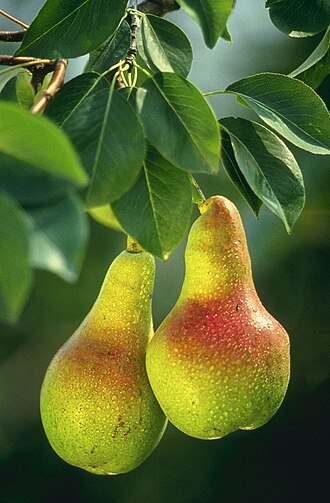
European pears often ripen off the tree (pick mature-green, ripen cool then room temp). Asian pears (P. pyrifolia) are a related species eaten crisp on the tree. Grit cells are stone cells, not a defect in many types.
GROW → HARVEST → EAT → DRY → POWDER → CAPSULE → GUMMY — forms are not equivalent. Food first.
Identity
What it is
European pears often ripen off the tree (pick mature-green, ripen cool then room temp). Asian pears (P. pyrifolia) are a related species eaten crisp on the tree. Grit cells are stone cells, not a defect in many types.
From the existing encyclopedia
Pear is chosen for texture, micronutrients, and how it carries spices in real cooking, not for miracle marketing. Introduce new ingredients gradually in cooking portions to learn flavor strength before scaling recipes. Mix into lentil, bean, or whole-grain bowls for texture and flavor depth. Rotate Pear with other staples in weekly meal plans so pantry kits stay versatile without repeating the same flavor profile every day.
Edible portions
- fruit
Absence of a portion from this list means it is not treated as food here — not that every other part is toxic.
Growing
- Climate. 4–8
- Light. Full sun
- Soil. Well-drained
- Planting. Pollenizer often needed. Fire blight is a disease to know, not a nutrient.
- Harvest. European: when fruit separates with an upward tilt, still firm. Asian: when crisp-ripe on the tree.
Processing, drying, storage
- Storage. Keepers in cold storage; ripen as needed. See also Make → Storage.
Preparation and culinary uses
- Fresh, poach, dry
Nutrition and compounds
- Vitamins (qualitative, well-known associations). fiber — not milligram values.
AAA interpretation Food first. These associations explain why a plant shows up in a nutrient conversation — they are not a supplement shopping list.
Next steps
Sources
- USDA PLANTS Database — taxonomy and range (verify current entries)
- USDA FoodData Central — nutrient profiles for foods (verify current entries; this page does not invent milligrams)
- State cooperative extension growing guides — verify for your region
- Integrated from the existing aaaLifetime / quantum-biohack encyclopedia corpus (unique text preserved where it was not boilerplate).
Honest incompleteness is preferred to fabricated completeness. If a section is missing, no record for it is attached here — not a claim that the plant lacks that characteristic, and not that it was omitted as a secret.
Internal quality class A. Strong page: distinctive plant facts plus practical growing or kitchen use.