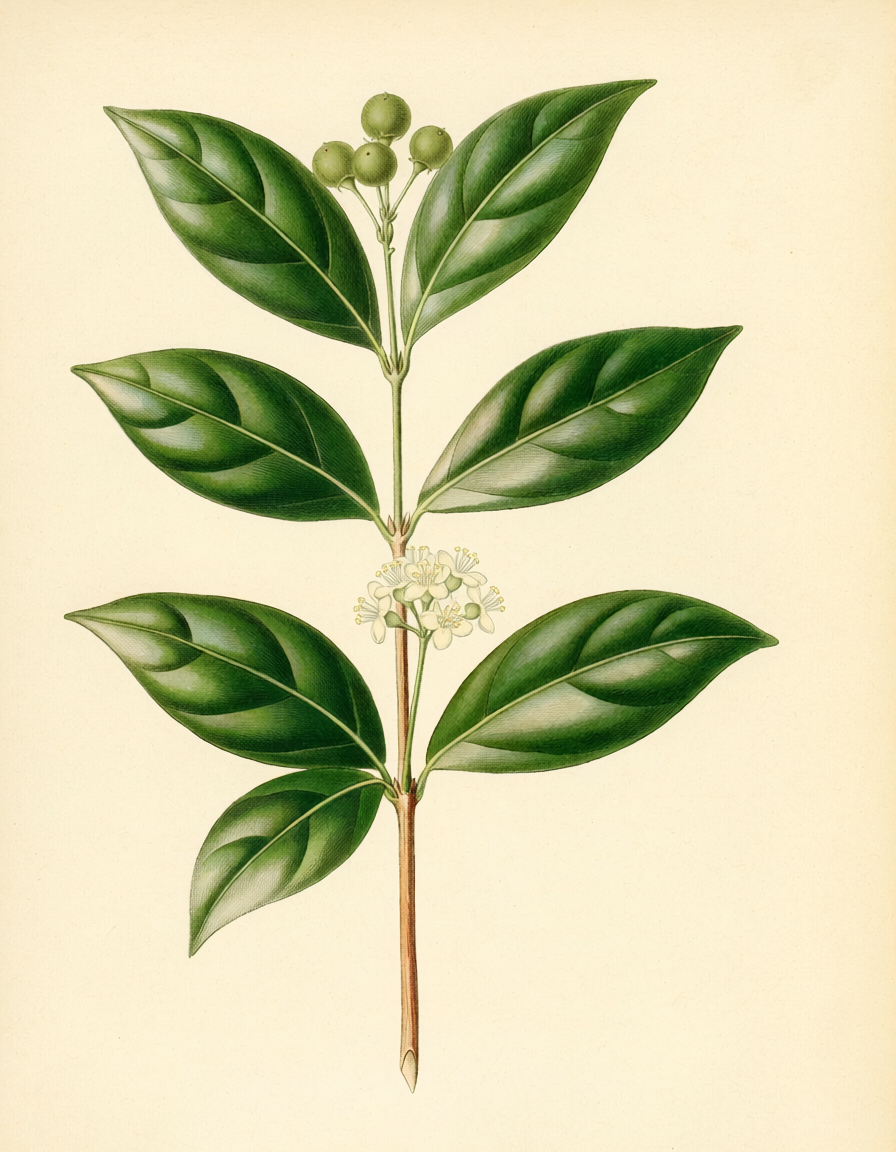
Allspice
Pimenta dioica
Dried unripe berries of a tropical myrtle tree. The name is honest: eugenol-rich berries taste like cinnamon, clove, and nutmeg at once. A pantry spice, not a temperate garden shrub in most of the U.S.
GROW → HARVEST → EAT → DRY → POWDER → CAPSULE → GUMMY — forms are not equivalent. Food first.
Identity
Also called: pimento berry, Jamaica pepper, Allspice tree, allspice-tree
What it is
Dried unripe berries of a tropical myrtle tree. The name is honest: eugenol-rich berries taste like cinnamon, clove, and nutmeg at once. A pantry spice, not a temperate garden shrub in most of the U.S.
From the existing encyclopedia
Allspice berries taste like a blend of cinnamon, clove, and nutmeg because they share aromatic compounds such as eugenol. Whole berries are essential in Caribbean jerk seasoning and pickling brines. Grind fresh for baking and mulled drinks; whole berries hold flavor longer in a pepper mill. One of the core warming spices suitable for pantry kits and holiday gift boxes.
Edible portions
- dried unripe berries
Absence of a portion from this list means it is not treated as food here — not that every other part is toxic.
Growing
- Climate. 10–12 (tree)
- Light. Full sun in frost-free climates
- Soil. Moist, fertile, well-drained tropical loam
- Planting. Not a kitchen-windowsill crop in cold winters; buy food-grade berries.
- Harvest. Commercial harvest is of green berries, then dried until they rattle.
Processing, drying, storage
- Drying. Berries are sold already dried; keep whole until use. See also Make → Drying.
- Storage. Whole berries hold aroma far longer than pre-ground powder. See also Make → Storage.
Preparation and culinary uses
- Whole berries in pickling brines and jerk rubs
- Grind fresh for baking and mulled drinks
Nutrition and compounds
- Plant compounds. eugenol. Presence is not a dose, a cure, or a reason to buy a capsule.
AAA interpretation Food first. These associations explain why a plant shows up in a nutrient conversation — they are not a supplement shopping list.
Next steps
Sources
- USDA PLANTS Database — taxonomy and range (verify current entries)
- USDA FoodData Central — nutrient profiles for foods (verify current entries; this page does not invent milligrams)
- State cooperative extension growing guides — verify for your region
- Integrated from the existing aaaLifetime / quantum-biohack encyclopedia corpus (unique text preserved where it was not boilerplate).
Honest incompleteness is preferred to fabricated completeness. If a section is missing, no record for it is attached here — not a claim that the plant lacks that characteristic, and not that it was omitted as a secret.
Internal quality class A. Strong page: distinctive plant facts plus practical growing or kitchen use.