Eucalyptus
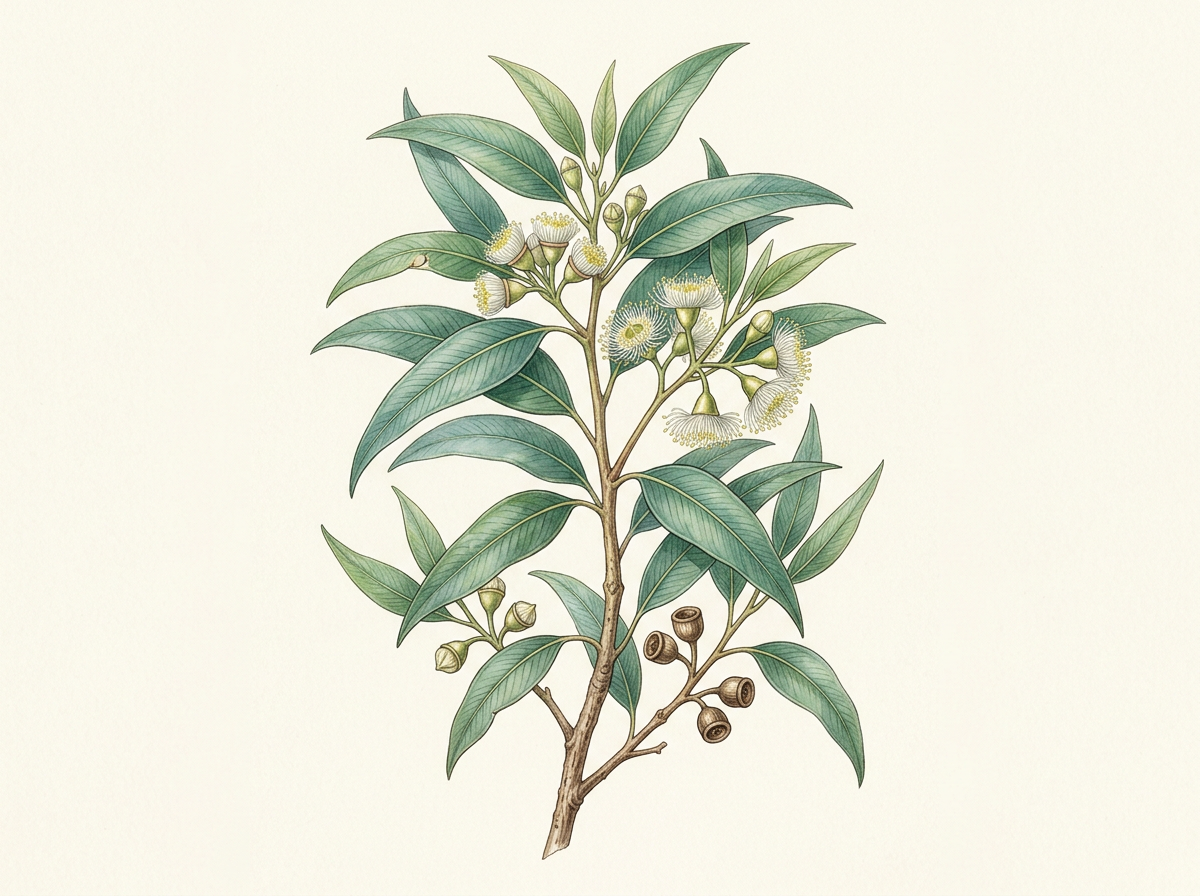
Eucalyptus globulus
Australian trees grown for cineole-rich leaves. Culinary use in the U.S. is essentially nil; steam-scented leaves are not a tea mandate. Koalas are the specialists; humans should not improvise internal doses.
GROW → HARVEST → EAT → DRY → POWDER → CAPSULE → GUMMY — forms are not equivalent. Food first.
Identity
What it is
Australian trees grown for cineole-rich leaves. Culinary use in the U.S. is essentially nil; steam-scented leaves are not a tea mandate. Koalas are the specialists; humans should not improvise internal doses.
Identification
Juvenile vs adult leaf shapes differ; peeling bark on many species.
From the existing encyclopedia
Eucalyptus shows up in regional spice blends, apothecary tea chests, and slow-cooked pots where aroma matters as much as flavor. Buy food-grade quality from suppliers who publish lot and origin; avoid mystery bulk without COA for sensitive items. Pairs well with garlic, onion, and black pepper in savory dishes. When substituting dried Eucalyptus for fresh, use about one-third the volume and bloom in fat or hot water before adding acid or dairy.
Edible portions
Safety Not treated as food on this site.
Growing
- Climate. 8–11 depending on species
- Light. Full sun
- Soil. Well-drained
- Planting. Fast trees where hardy; invasive concern in some regions.
Nutrition and compounds
- Plant compounds. 1,8-cineole. Presence is not a dose, a cure, or a reason to buy a capsule.
AAA interpretation Food first. These associations explain why a plant shows up in a nutrient conversation — they are not a supplement shopping list.
Safety
- Essential oil is concentrated and not a food. Do not ingest oil. This is an identification/scent plant on this site, not a pantry herb.
Next steps
Sources
- USDA PLANTS Database — taxonomy and range (verify current entries)
- USDA FoodData Central — nutrient profiles for foods (verify current entries; this page does not invent milligrams)
- State cooperative extension growing guides — verify for your region
- Integrated from the existing aaaLifetime / quantum-biohack encyclopedia corpus (unique text preserved where it was not boilerplate).
Honest incompleteness is preferred to fabricated completeness. If a section is missing, no record for it is attached here — not a claim that the plant lacks that characteristic, and not that it was omitted as a secret.
Internal quality class A. Strong page: distinctive plant facts plus practical growing or kitchen use.