Osmanthus
Osmanthus fragrans
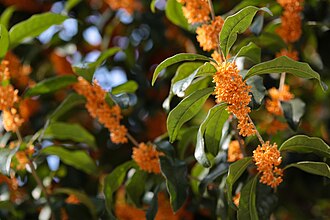
Sweet olive. Tiny cream flowers perfume teas and jams in Chinese cooking. An evergreen shrub, not an olive tree and not a fruit.
GROW → HARVEST → EAT → DRY → POWDER → CAPSULE → GUMMY — forms are not equivalent. Food first.
Identity
What it is
Sweet olive. Tiny cream flowers perfume teas and jams in Chinese cooking. An evergreen shrub, not an olive tree and not a fruit.
From the existing encyclopedia
Osmanthus lends floral aroma to teas, honey, and dessert sauces. A little quantity goes far; overpowering heat destroys delicate volatile oils. Rehydrate dried forms in warm water before adding to long braises for even texture. Mix into lentil, bean, or whole-grain bowls for texture and flavor depth. When substituting dried Osmanthus for fresh, use about one-third the volume and bloom in fat or hot water before adding acid or dairy.
Edible portions
- flowers as scent
Absence of a portion from this list means it is not treated as food here — not that every other part is toxic.
Growing
- Climate. 8–10
- Light. Sun to part shade
- Soil. Well-drained, slightly acid
- Planting. Slow shrub; flowers in cool seasons in many climates.
Preparation and culinary uses
- Scented tea, sweet osmanthus jam, osmanthus-scented syrups
Next steps
Sources
- USDA PLANTS Database — taxonomy and range (verify current entries)
- No USDA FoodData Central nutrient profile is attached here. That is not a claim that the plant contains no nutrients.
- State cooperative extension growing guides — verify for your region
- Integrated from the existing aaaLifetime / quantum-biohack encyclopedia corpus (unique text preserved where it was not boilerplate).
Honest incompleteness is preferred to fabricated completeness. If a section is missing, no record for it is attached here — not a claim that the plant lacks that characteristic, and not that it was omitted as a secret.
Internal quality class A. Strong page: distinctive plant facts plus practical growing or kitchen use.