Jasmine
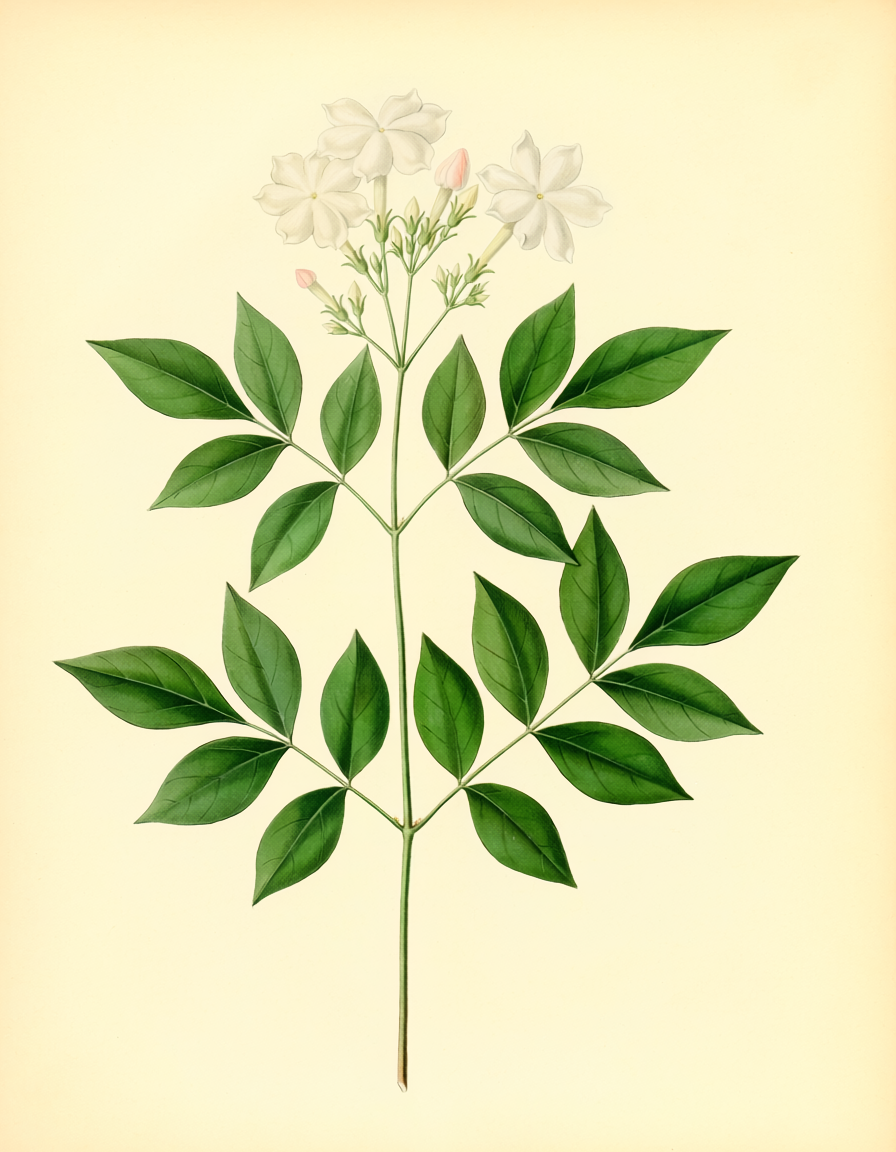
Jasminum officinale
A scented vine. Tea ‘jasmine’ is usually green tea scented with Jasminum sambac flowers — Camellia plus perfume — not a cup of vine leaves. Distinguish true jasmine from toxic ‘yellow jasmine’ (Gelsemium).
GROW → HARVEST → EAT → DRY → POWDER → CAPSULE → GUMMY — forms are not equivalent. Food first.
Identity
What it is
A scented vine. Tea ‘jasmine’ is usually green tea scented with Jasminum sambac flowers — Camellia plus perfume — not a cup of vine leaves. Distinguish true jasmine from toxic ‘yellow jasmine’ (Gelsemium).
From the existing encyclopedia
Jasmine lends floral aroma to teas, honey, and dessert sauces. A little quantity goes far; overpowering heat destroys delicate volatile oils. Store in a cool, dark cupboard in an airtight jar; label with purchase date. Mix into lentil, bean, or whole-grain bowls for texture and flavor depth. When substituting dried Jasmine for fresh, use about one-third the volume and bloom in fat or hot water before adding acid or dairy.
Edible portions
- flowers as scent for tea, not a vegetable
Absence of a portion from this list means it is not treated as food here — not that every other part is toxic.
Growing
- Climate. 7–10 vine depending on species
- Light. Full sun to light shade
- Soil. Well-drained
- Planting. Twining vine on a support; species hardiness varies.
Preparation and culinary uses
- Scent tea leaves with fresh flowers, then remove flowers
Safety
- Gelsemium (Carolina jessamine) is not culinary jasmine and is toxic. Identify the plant before you invent a tea.
Next steps
Sources
- USDA PLANTS Database — taxonomy and range (verify current entries)
- No USDA FoodData Central nutrient profile is attached here. That is not a claim that the plant contains no nutrients.
- State cooperative extension growing guides — verify for your region
- Integrated from the existing aaaLifetime / quantum-biohack encyclopedia corpus (unique text preserved where it was not boilerplate).
Honest incompleteness is preferred to fabricated completeness. If a section is missing, no record for it is attached here — not a claim that the plant lacks that characteristic, and not that it was omitted as a secret.
Internal quality class A. Strong page: distinctive plant facts plus practical growing or kitchen use.