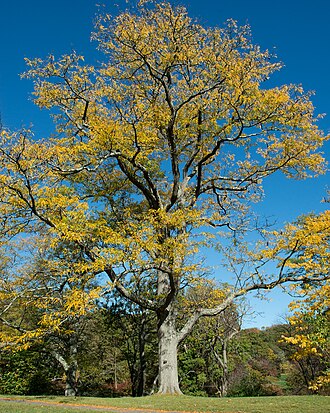
Honey locust
Gleditsia triacanthos
Sweet pulp in some wild pods (the namesake honey). Thornless cultivars are street trees that may not fruit the same. Not black locust (Robinia — different, and seeds not a snack).
GROW → HARVEST → EAT → DRY → POWDER → CAPSULE → GUMMY — forms are not equivalent. Food first.
Identity
What it is
Sweet pulp in some wild pods (the namesake honey). Thornless cultivars are street trees that may not fruit the same. Not black locust (Robinia — different, and seeds not a snack).
Edible portions
- sweet pulp of ripe pods on some trees — not the seeds as a staple
Absence of a portion from this list means it is not treated as food here — not that every other part is toxic.
Growing
- Climate. 3–9
- Light. Full sun
- Soil. Tough urban soils
- Planting. Huge thorns on wild type. Street cultivars often thornless.
- Harvest. Ripe pods; pulp only if you know the tree.
Preparation and culinary uses
- A nibble of pulp, historically; not a grocery flour like mesquite
Safety
- Don’t eat mystery locust seeds. Robinia (black locust) is a different tree with toxic parts.
Next steps
Sources
- USDA PLANTS Database — taxonomy and range (verify current entries)
- No USDA FoodData Central nutrient profile is attached here. That is not a claim that the plant contains no nutrients.
- State cooperative extension growing guides — verify for your region
Honest incompleteness is preferred to fabricated completeness. If a section is missing, no record for it is attached here — not a claim that the plant lacks that characteristic, and not that it was omitted as a secret.
Internal quality class A. Strong page: distinctive plant facts plus practical growing or kitchen use.