Dong quai
Angelica sinensis
A Chinese angelica grown for its fragrant root in traditional formulas. It is not a Western culinary angelica substitute and not a salad herb.
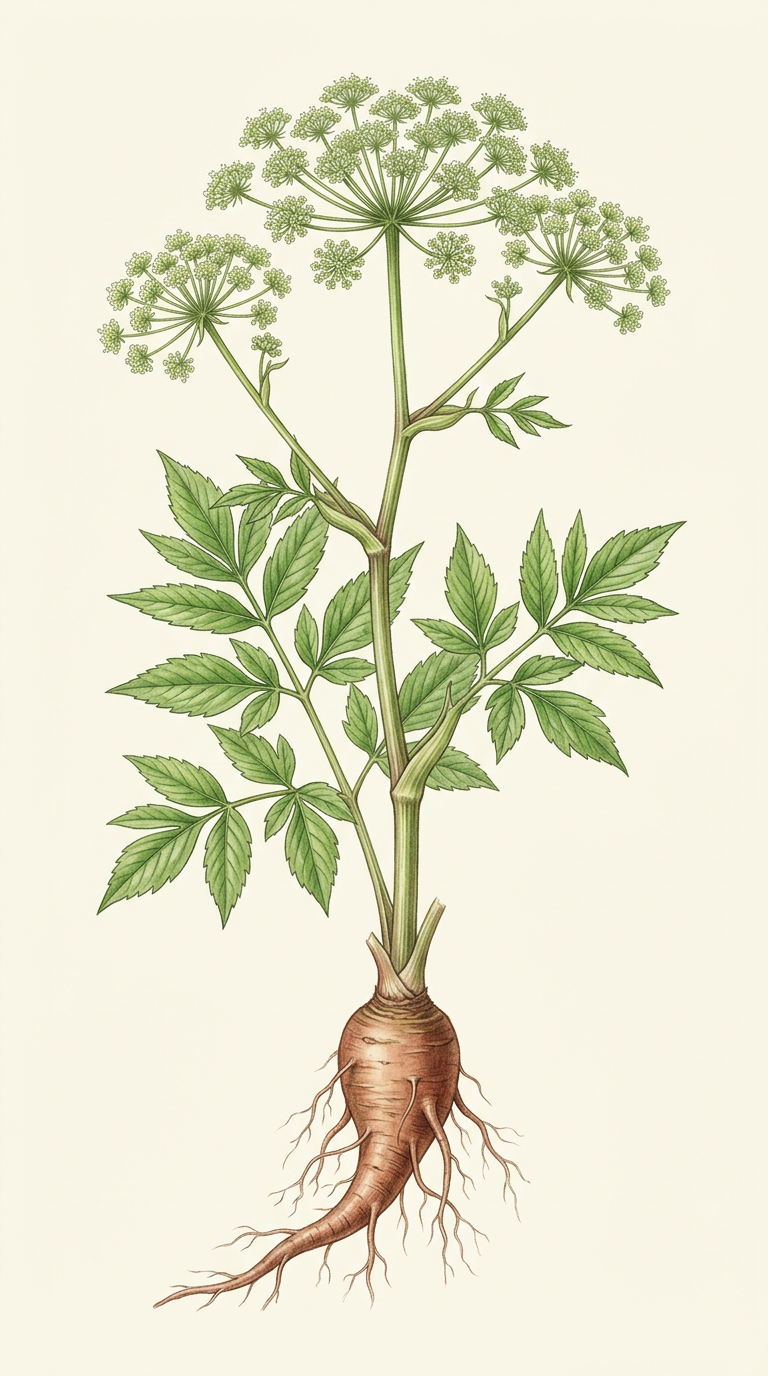
GROW → HARVEST → EAT → DRY → POWDER → CAPSULE → GUMMY — forms are not equivalent. Food first.
Identity
Also called: dang gui, female ginseng (marketing nickname — not Panax)
What it is
A Chinese angelica grown for its fragrant root in traditional formulas. It is not a Western culinary angelica substitute and not a salad herb.
From the existing encyclopedia
Dong Quai shows up in regional spice blends, apothecary tea chests, and slow-cooked pots where aroma matters as much as flavor. Cross-link pantry planning with v1 kits on the store page when this item appears in a bundle. Balances with honey or dates in warm drinks when used as food sweetening. When substituting dried Dong Quai for fresh, use about one-third the volume and bloom in fat or hot water before adding acid or dairy.
Edible portions
- root in traditional decoctions, not a vegetable
Absence of a portion from this list means it is not treated as food here — not that every other part is toxic.
Growing
- Climate. 5–8
- Light. Part shade, cool
- Soil. Deep, moist, rich
- Planting. Slow biennial/perennial umbellifer; identification among Angelica matters.
Traditional uses
Traditional use Chinese herbal decoctions — traditional use
AAA interpretation Traditional use is not automatically evidence, and evidence is not automatically a shopping recommendation.
Safety
- Not a food-first pantry staple. Concentrated products are supplements. Avoid confusing marketing nicknames with ginseng (Panax).
Next steps
Sources
- USDA PLANTS Database — taxonomy and range (verify current entries)
- No USDA FoodData Central nutrient profile is attached here. That is not a claim that the plant contains no nutrients.
- State cooperative extension growing guides — verify for your region
- Integrated from the existing aaaLifetime / quantum-biohack encyclopedia corpus (unique text preserved where it was not boilerplate).
Honest incompleteness is preferred to fabricated completeness. If a section is missing, no record for it is attached here — not a claim that the plant lacks that characteristic, and not that it was omitted as a secret.
Internal quality class A. Strong page: distinctive plant facts plus practical growing or kitchen use.