Angelica
Angelica archangelica
A tall biennial umbellifer. Candied young stems are a historical confection; the seeds and roots are strongly aromatic. Do not confuse with toxic look-alike umbellifers such as poison hemlock.
GROW → HARVEST → EAT → DRY → POWDER → CAPSULE → GUMMY — forms are not equivalent. Food first.
Identity
What it is
A tall biennial umbellifer. Candied young stems are a historical confection; the seeds and roots are strongly aromatic. Do not confuse with toxic look-alike umbellifers such as poison hemlock.
Identification
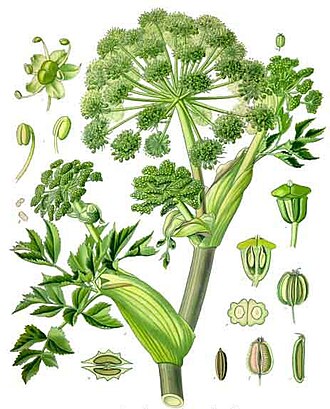
Huge inflated leaf sheaths; greenish-white umbels; celery-musk scent.
From the existing encyclopedia
Angelica is a dried botanical traded as cut leaf, flower, seed, or root for tea and seasoning. Buy food-grade quality from suppliers who publish lot and origin; avoid mystery bulk without COA for sensitive items. Complements lemon, lime, or vinegar acidity in dressings and marinades. When substituting dried Angelica for fresh, use about one-third the volume and bloom in fat or hot water before adding acid or dairy.
Edible portions
- young stems (candied)
- seeds (aromatic)
Absence of a portion from this list means it is not treated as food here — not that every other part is toxic.
Growing
- Climate. 4–7
- Light. Part shade; prefers cool summers
- Soil. Moist, rich, deep
- Planting. Sow fresh seed; viability drops fast. Biennial — leaves year one, bloom year two.
- Harvest. Young green stems in year two before they toughen; seeds as umbels dry.
Preparation and culinary uses
- Candy stems in sugar syrup
- A few seeds in rhubarb or gin-style infusions
Safety
- Identify carefully among Apiaceae. Do not forage umbellifers unless you can separate angelica from poison hemlock and water hemlock.
Next steps
Sources
- USDA PLANTS Database — taxonomy and range (verify current entries)
- No USDA FoodData Central nutrient profile is attached here. That is not a claim that the plant contains no nutrients.
- State cooperative extension growing guides — verify for your region
- Integrated from the existing aaaLifetime / quantum-biohack encyclopedia corpus (unique text preserved where it was not boilerplate).
Honest incompleteness is preferred to fabricated completeness. If a section is missing, no record for it is attached here — not a claim that the plant lacks that characteristic, and not that it was omitted as a secret.
Internal quality class A. Strong page: distinctive plant facts plus practical growing or kitchen use.