Black walnut
Juglans nigra
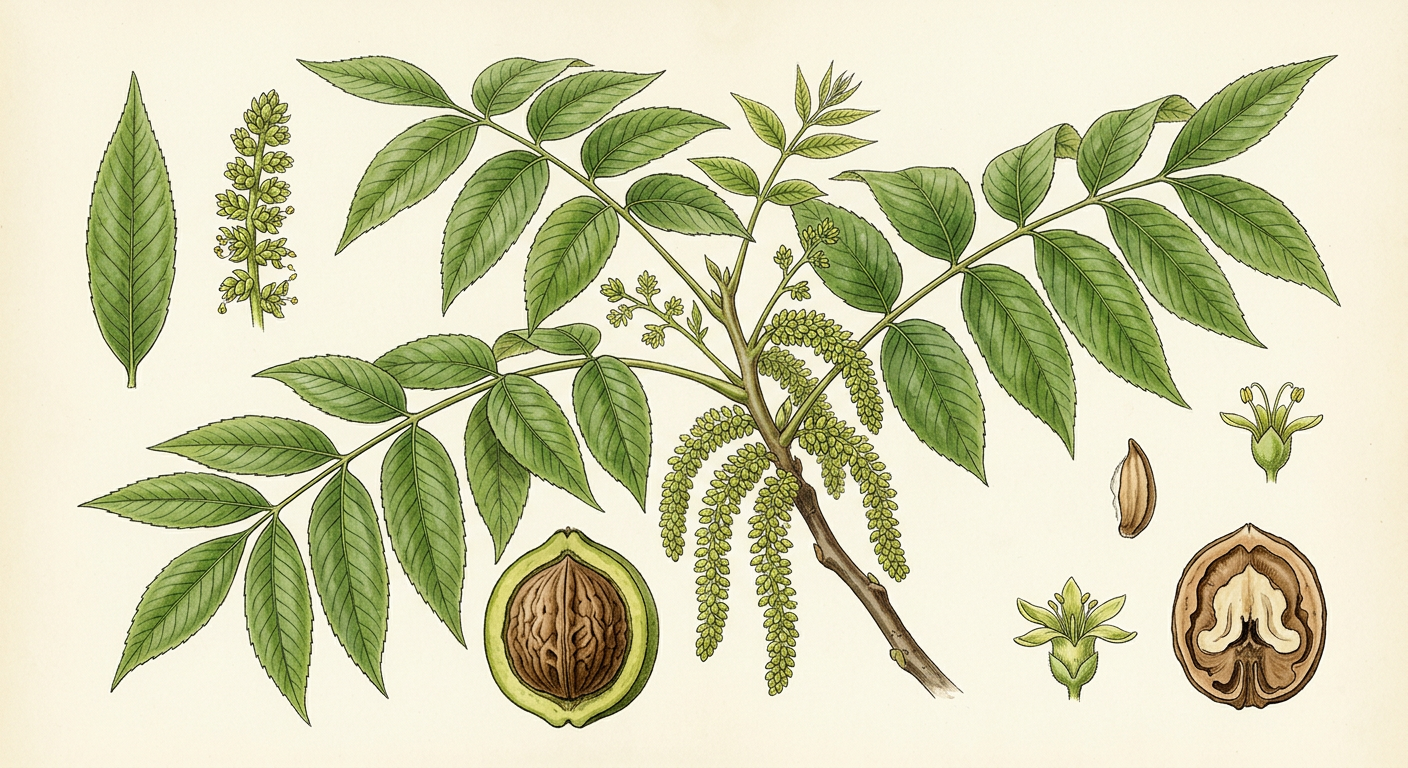
Native North American walnut. Thicker shell, wilder flavor, husks stain everything. Juglone is famous in the vegetable garden (tomatoes nearby often sulk).
GROW → HARVEST → EAT → DRY → POWDER → CAPSULE → GUMMY — forms are not equivalent. Food first.
Identity
What it is
Native North American walnut. Thicker shell, wilder flavor, husks stain everything. Juglone is famous in the vegetable garden (tomatoes nearby often sulk).
Edible portions
- seeds
Absence of a portion from this list means it is not treated as food here — not that every other part is toxic.
Growing
- Climate. 4–9
- Light. Full sun
- Soil. Deep
- Planting. Huge tree. Don’t site a tomato bed on the root zone and then complain.
- Harvest. Husks soften; wear gloves. Dry nuts.
Processing, drying, storage
- Storage. Dry hard; freeze kernels. See also Make → Storage.
Preparation and culinary uses
- Ice cream, baking — stronger than English walnut
Next steps
Sources
- USDA PLANTS Database — taxonomy and range (verify current entries)
- No USDA FoodData Central nutrient profile is attached here. That is not a claim that the plant contains no nutrients.
- State cooperative extension growing guides — verify for your region
Honest incompleteness is preferred to fabricated completeness. If a section is missing, no record for it is attached here — not a claim that the plant lacks that characteristic, and not that it was omitted as a secret.
Internal quality class B. Good foundation: enough unique information to exist as its own destination.