Saffron
Crocus sativus
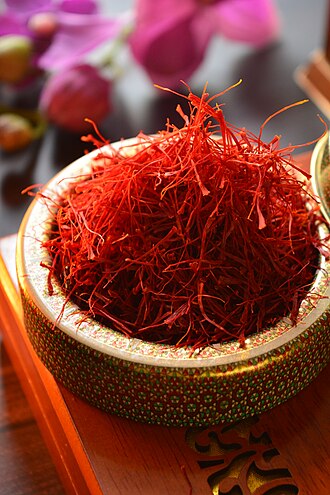
A sterile autumn crocus. The spice is three red stigmas per flower, hand-picked. Expensive because of labor, not because it is a hormone. Autumn-blooming; don’t confuse with toxic look-alike colchicum.
GROW → HARVEST → EAT → DRY → POWDER → CAPSULE → GUMMY — forms are not equivalent. Food first.
Identity
What it is
A sterile autumn crocus. The spice is three red stigmas per flower, hand-picked. Expensive because of labor, not because it is a hormone. Autumn-blooming; don’t confuse with toxic look-alike colchicum.
Edible portions
- dried stigmas in tiny culinary amounts
Absence of a portion from this list means it is not treated as food here — not that every other part is toxic.
Growing
- Climate. 6–8 well-drained summer-dry
- Light. Full sun
- Soil. Sharp drainage, summer-dry like a Mediterranean bulb
- Planting. Corms in late summer. They offset slowly.
- Harvest. Dawn of bloom; pluck stigmas; dry the same day.
Processing, drying, storage
- Drying. Dry stigmas immediately; store airtight, dark. See also Make → Drying.
Preparation and culinary uses
- A few threads in rice, not a teaspoon as a mood protocol
Safety
- Colchicum autumnale (autumn crocus, different family) is toxic. Culinary Crocus sativus has three long red stigmas. Food amounts of saffron are tiny.
Next steps
Sources
- USDA PLANTS Database — taxonomy and range (verify current entries)
- No USDA FoodData Central nutrient profile is attached here. That is not a claim that the plant contains no nutrients.
- State cooperative extension growing guides — verify for your region
Honest incompleteness is preferred to fabricated completeness. If a section is missing, no record for it is attached here — not a claim that the plant lacks that characteristic, and not that it was omitted as a secret.
Internal quality class A. Strong page: distinctive plant facts plus practical growing or kitchen use.