Rhubarb
Rheum rhabarbarum
A perennial grown for sour petioles (stalks). Leaf blades contain high oxalic acid and are not food. A cool-climate pie plant, botanically a vegetable, culinarily a fruit.
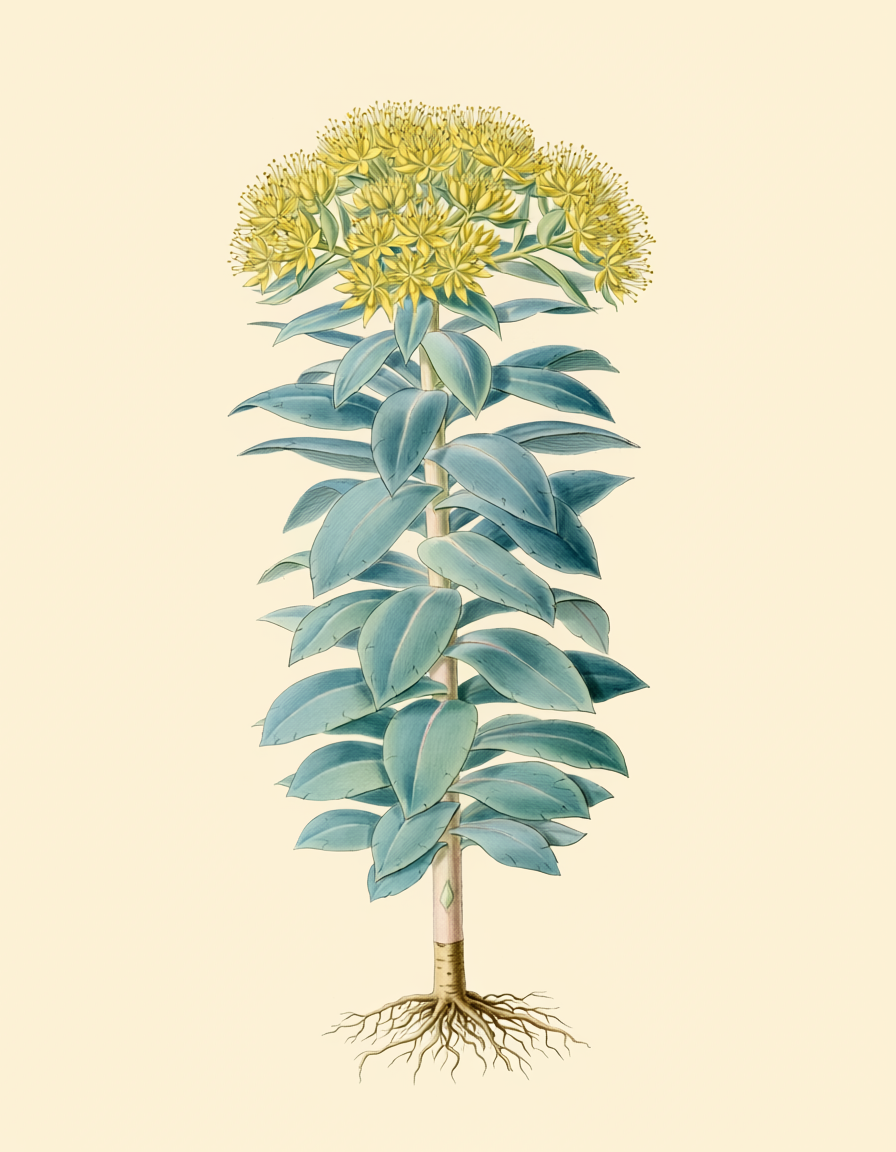
GROW → HARVEST → EAT → DRY → POWDER → CAPSULE → GUMMY — forms are not equivalent. Food first.
Identity
What it is
A perennial grown for sour petioles (stalks). Leaf blades contain high oxalic acid and are not food. A cool-climate pie plant, botanically a vegetable, culinarily a fruit.
From the existing encyclopedia
Home cooks and herbal tea drinkers know Rhubarb for its signature scent and the way it layers with citrus, honey, or allium. Introduce new ingredients gradually in cooking portions to learn flavor strength before scaling recipes. Works alongside green tea or ginger in everyday beverage rotation. When substituting dried Rhubarb for fresh, use about one-third the volume and bloom in fat or hot water before adding acid or dairy.
Edible portions
- leaf stalks only
Absence of a portion from this list means it is not treated as food here — not that every other part is toxic.
Growing
- Climate. 3–8
- Light. Full sun to light shade
- Soil. Rich, deep, moist, heavy feeder
- Planting. Crowns; wait until year two to harvest much.
- Harvest. Pull stalks (don’t cut) in spring; leave at least a third of the plant.
Preparation and culinary uses
- Pie, compote — needs sugar or a sweet partner
Nutrition and compounds
- Vitamins (qualitative, well-known associations). vitamin K — not milligram values.
AAA interpretation Food first. These associations explain why a plant shows up in a nutrient conversation — they are not a supplement shopping list.
Safety
- Do not eat the leaf blades. Stalks are the food.
Next steps
Sources
- USDA PLANTS Database — taxonomy and range (verify current entries)
- USDA FoodData Central — nutrient profiles for foods (verify current entries; this page does not invent milligrams)
- State cooperative extension growing guides — verify for your region
- Integrated from the existing aaaLifetime / quantum-biohack encyclopedia corpus (unique text preserved where it was not boilerplate).
Honest incompleteness is preferred to fabricated completeness. If a section is missing, no record for it is attached here — not a claim that the plant lacks that characteristic, and not that it was omitted as a secret.
Internal quality class A. Strong page: distinctive plant facts plus practical growing or kitchen use.