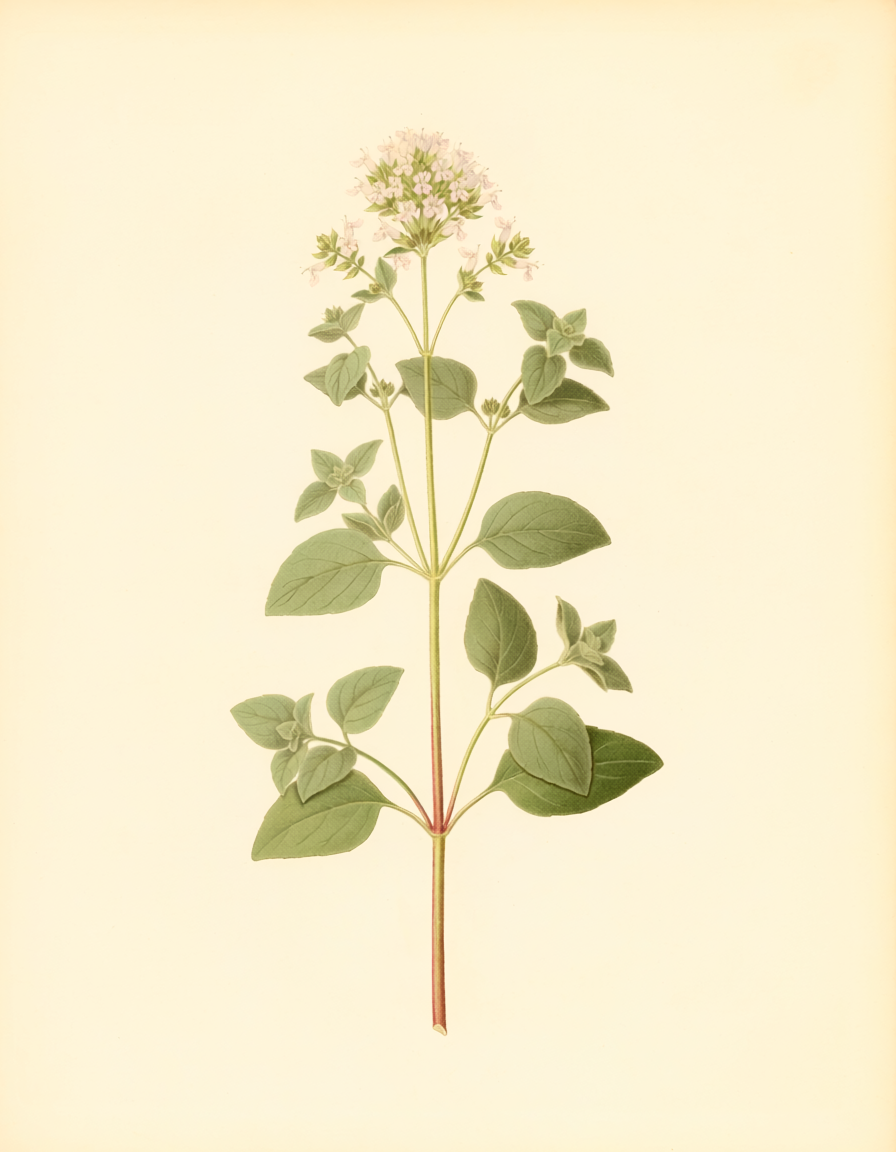
Oregano
Origanum vulgare
A variable species. Greek/Turkish types (often O. vulgare subsp. hirtum) are the pizza herb; some ornamental oreganos are bland. Flavor is phenols in the leaf — crush dried leaf to wake it.
GROW → HARVEST → EAT → DRY → POWDER → CAPSULE → GUMMY — forms are not equivalent. Food first.
Identity
What it is
A variable species. Greek/Turkish types (often O. vulgare subsp. hirtum) are the pizza herb; some ornamental oreganos are bland. Flavor is phenols in the leaf — crush dried leaf to wake it.
From the existing encyclopedia
Oregano is a dried botanical traded as cut leaf, flower, seed, or root for tea and seasoning. Traditional and folk literature also mentions decrease hepatic glucose production — we describe food and tea uses here, not medical protocols. Toast whole seeds briefly in a dry pan to wake volatile oils before grinding. Mix into lentil, bean, or whole-grain bowls for texture and flavor depth. When substituting dried Oregano for fresh, use about one-third the volume and bloom in fat or hot water before adding acid or dairy.
Edible portions
- leaves
Absence of a portion from this list means it is not treated as food here — not that every other part is toxic.
Growing
- Climate. 5–9 hardy types
- Light. Full sun
- Soil. Lean, well-drained
- Planting. Start from a flavorful culinary clone, not a random ornamental.
- Harvest. Cut before full bloom; flavor is strong dried.
Processing, drying, storage
- Drying. One of the herbs that dries with real personality. See also Make → Drying.
Preparation and culinary uses
- Tomato sauce, grilled meats, beans
- Crush dried leaf in the palm
Nutrition and compounds
- Plant compounds. carvacrol, thymol. Presence is not a dose, a cure, or a reason to buy a capsule.
AAA interpretation Food first. These associations explain why a plant shows up in a nutrient conversation — they are not a supplement shopping list.
Next steps
Sources
- USDA PLANTS Database — taxonomy and range (verify current entries)
- USDA FoodData Central — nutrient profiles for foods (verify current entries; this page does not invent milligrams)
- State cooperative extension growing guides — verify for your region
- Integrated from the existing aaaLifetime / quantum-biohack encyclopedia corpus (unique text preserved where it was not boilerplate).
Honest incompleteness is preferred to fabricated completeness. If a section is missing, no record for it is attached here — not a claim that the plant lacks that characteristic, and not that it was omitted as a secret.
Internal quality class A. Strong page: distinctive plant facts plus practical growing or kitchen use.