Coffee
Coffea arabica
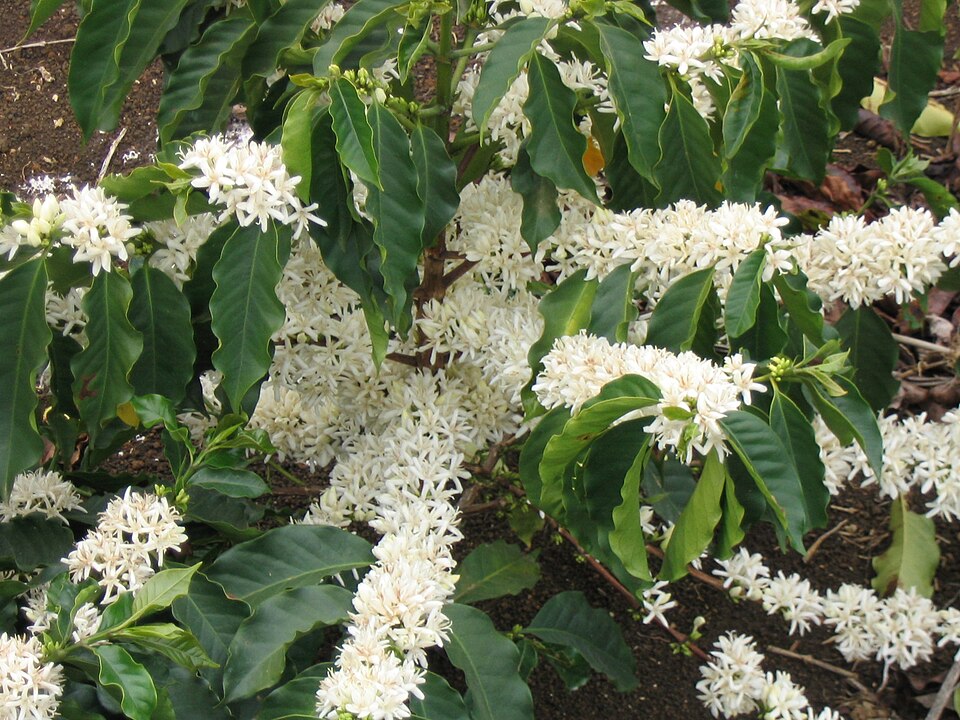
An understory shrub. You drink a roasted seed infusion, not a leaf vegetable. Arabica vs robusta (C. canephora) are different species. Caffeine is the pharmacology people actually use.
GROW → HARVEST → EAT → DRY → POWDER → CAPSULE → GUMMY — forms are not equivalent. Food first.
Identity
What it is
An understory shrub. You drink a roasted seed infusion, not a leaf vegetable. Arabica vs robusta (C. canephora) are different species. Caffeine is the pharmacology people actually use.
Edible portions
- roasted seeds as a beverage
Absence of a portion from this list means it is not treated as food here — not that every other part is toxic.
Growing
- Climate. 10–11 tropical highlands for arabica
- Light. Part shade in origin
- Soil. Well-drained, organic, acid-leaning
- Planting. A houseplant curiosity in the north; a farm in the tropics.
- Harvest. Red cherries; wet or dry process, then roast.
Processing, drying, storage
- Processing. Cherry → process → dry → roast → grind → brew. Instant and capsules are further processes.
Preparation and culinary uses
- Brewed beverage
Nutrition and compounds
- Plant compounds. caffeine, chlorogenic acids. Presence is not a dose, a cure, or a reason to buy a capsule.
AAA interpretation Food first. These associations explain why a plant shows up in a nutrient conversation — they are not a supplement shopping list.
Next steps
Sources
- USDA PLANTS Database — taxonomy and range (verify current entries)
- USDA FoodData Central — nutrient profiles for foods (verify current entries; this page does not invent milligrams)
- State cooperative extension growing guides — verify for your region
Honest incompleteness is preferred to fabricated completeness. If a section is missing, no record for it is attached here — not a claim that the plant lacks that characteristic, and not that it was omitted as a secret.
Internal quality class A. Strong page: distinctive plant facts plus practical growing or kitchen use.