Cattail
Typha latifolia
A wetland plant with several edible stages (shoots, pollen, immature spikes, rhizome starch) in skilled foraging. Pollution in the water becomes your food. Identify vs irises in the same mud.
GROW → HARVEST → EAT → DRY → POWDER → CAPSULE → GUMMY — forms are not equivalent. Food first.
Identity
What it is
A wetland plant with several edible stages (shoots, pollen, immature spikes, rhizome starch) in skilled foraging. Pollution in the water becomes your food. Identify vs irises in the same mud.
Identification
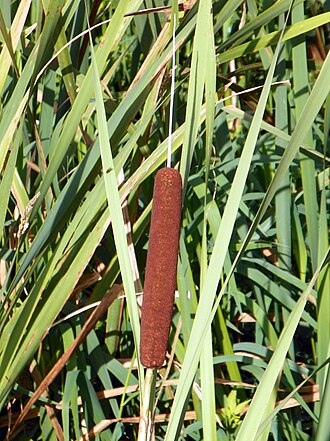
Flat fans vs iris; hot-dog flower spike is diagnostic later in the year.
Edible portions
- young shoots
- pollen
- immature flower spikes
- rhizome starch — skilled forage
Absence of a portion from this list means it is not treated as food here — not that every other part is toxic.
Growing
- Climate. 3–10 wetlands
- Light. Full sun, standing water
- Soil. Muck
- Planting. It will take a pond. Contain it.
- Harvest. Clean water only. Young shoots in spring; pollen when it dusts.
Preparation and culinary uses
- ‘Cossack asparagus’ shoots, pollen flour mix
Safety
- Wetland pollution concentrates. Iris shoots in the same habitat are not cattail. Learn the leaf cross-section and the flower spike.
Next steps
Sources
- USDA PLANTS Database — taxonomy and range (verify current entries)
- No USDA FoodData Central nutrient profile is attached here. That is not a claim that the plant contains no nutrients.
- State cooperative extension growing guides — verify for your region
Honest incompleteness is preferred to fabricated completeness. If a section is missing, no record for it is attached here — not a claim that the plant lacks that characteristic, and not that it was omitted as a secret.
Internal quality class A. Strong page: distinctive plant facts plus practical growing or kitchen use.