Calendula
Calendula officinalis
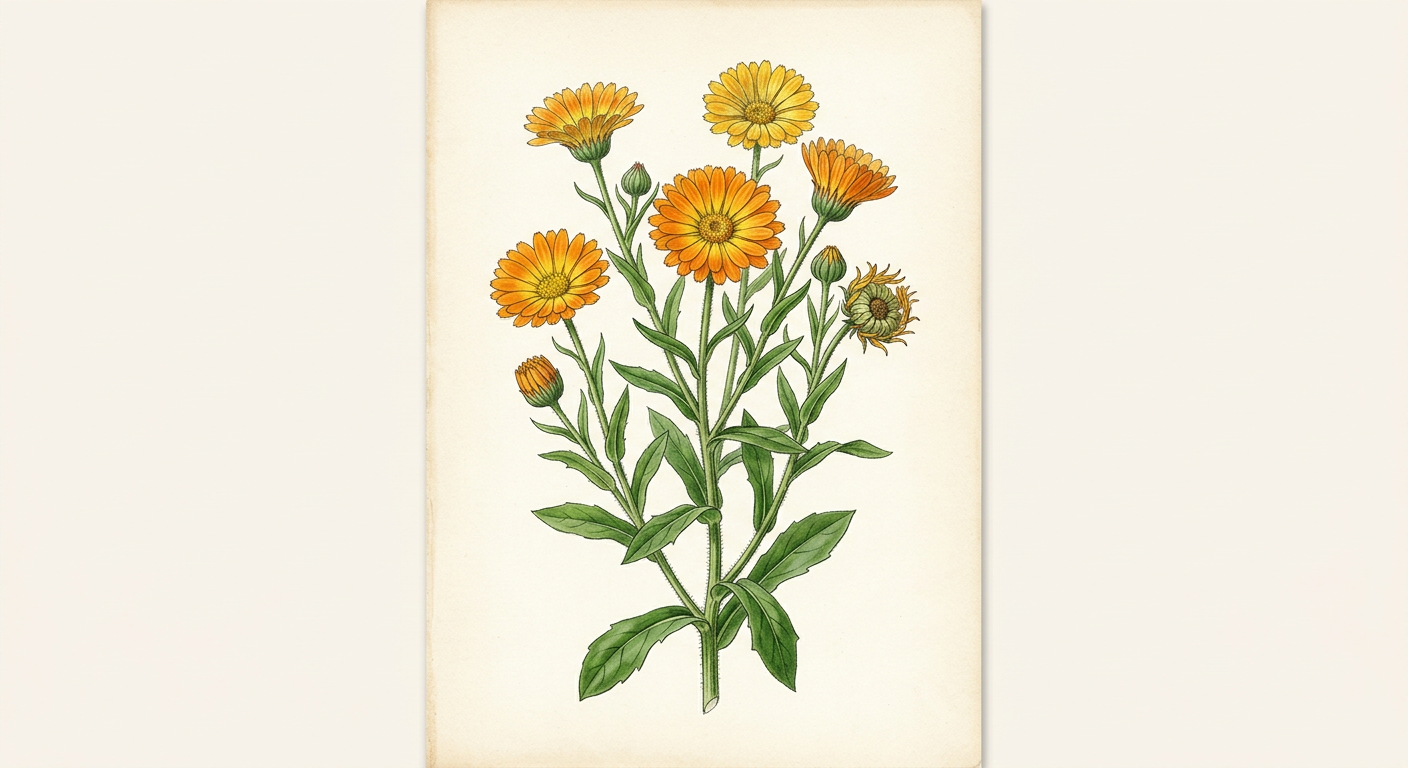
Pot marigold — not Tagetes garden marigold. Petals are a saffron-colored food dye and a traditional skin salve flower. Easy cool-season annual.
GROW → HARVEST → EAT → DRY → POWDER → CAPSULE → GUMMY — forms are not equivalent. Food first.
Identity
Also called: pot marigold
What it is
Pot marigold — not Tagetes garden marigold. Petals are a saffron-colored food dye and a traditional skin salve flower. Easy cool-season annual.
From the existing encyclopedia
Home cooks and herbal tea drinkers know Calendula for its signature scent and the way it layers with citrus, honey, or allium. Toast whole seeds briefly in a dry pan to wake volatile oils before grinding. Pairs well with garlic, onion, and black pepper in savory dishes. When substituting dried Calendula for fresh, use about one-third the volume and bloom in fat or hot water before adding acid or dairy.
Edible portions
- petals
Absence of a portion from this list means it is not treated as food here — not that every other part is toxic.
Growing
- Climate. Annual; hardy in cool weather
- Light. Full sun
- Soil. Average, well-drained
- Planting. Direct-sow early; deadhead to keep blooming.
- Harvest. Pick fully open heads on dry mornings; pull petals for food color.
Processing, drying, storage
- Drying. Dry whole heads until crisp; petals store as a colorant. See also Make → Drying.
Preparation and culinary uses
- Petals in rice, butter, and salads as color, not a saffron flavor match
Traditional uses
Traditional use Folk skin salves — traditional external use
AAA interpretation Traditional use is not automatically evidence, and evidence is not automatically a shopping recommendation.
Next steps
Sources
- USDA PLANTS Database — taxonomy and range (verify current entries)
- No USDA FoodData Central nutrient profile is attached here. That is not a claim that the plant contains no nutrients.
- State cooperative extension growing guides — verify for your region
- Integrated from the existing aaaLifetime / quantum-biohack encyclopedia corpus (unique text preserved where it was not boilerplate).
Honest incompleteness is preferred to fabricated completeness. If a section is missing, no record for it is attached here — not a claim that the plant lacks that characteristic, and not that it was omitted as a secret.
Internal quality class A. Strong page: distinctive plant facts plus practical growing or kitchen use.